

It's all been done before?
May 22, 2026On a recent visit to the National Gallery of Australia in Canberra, I walked through many grand galleries and saw significant works of art. Yet it was the relatively small painting by the Australian painter Grace Cossington Smith that has stayed on my mind.
It is titled Sea Wave. Oil on pulpboard. Painted in 1931. Just 41cm high and 35cm wide.
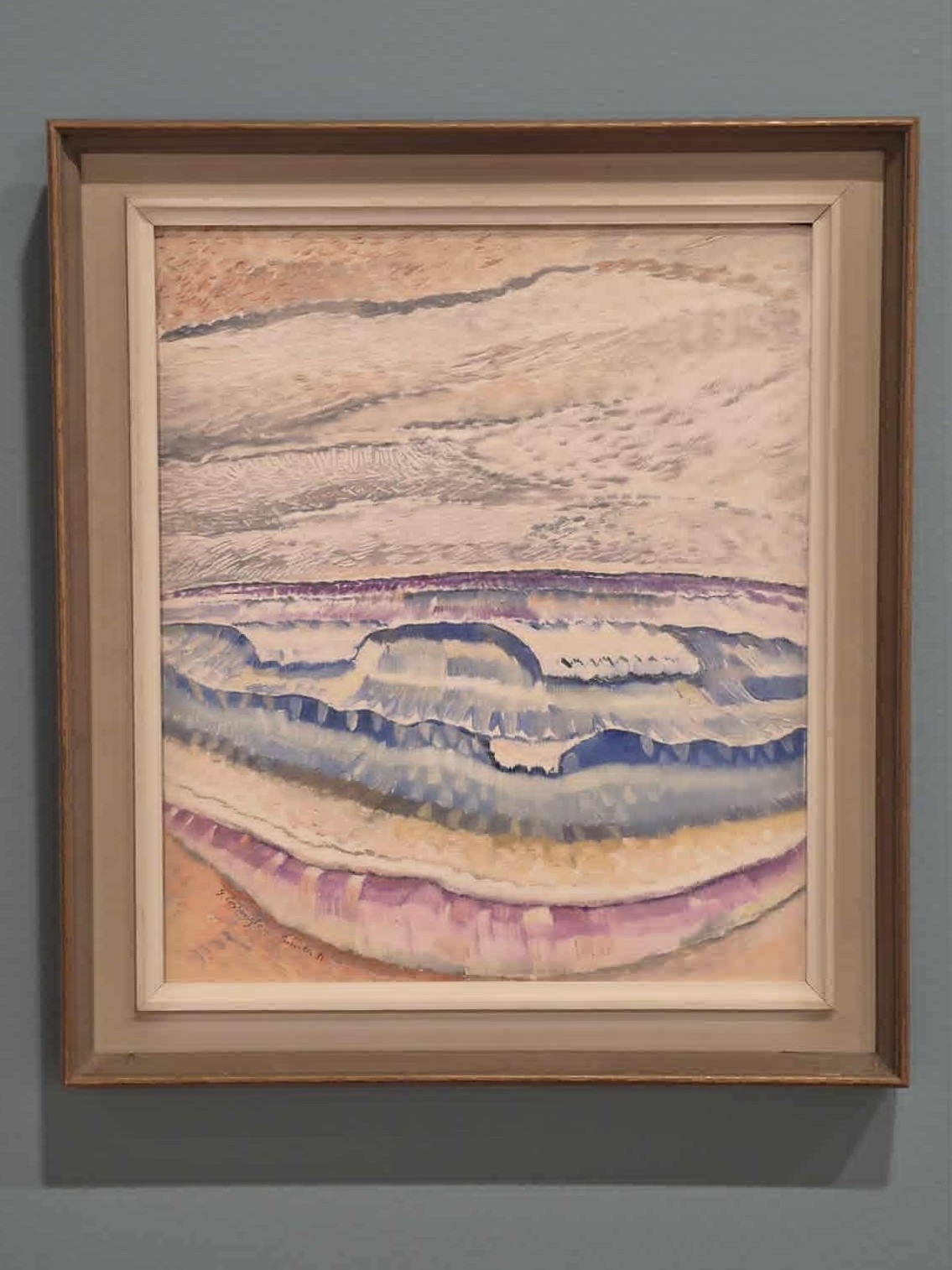
I discussed it recently with my Evolve artists because, as well as being an exceptional and emotive work of art, I think it offers clues for our own work as makers.
The sea, waves, and the shoreline have long been rich subject matter for many artists, not just visual artists. Hokusai’s iconic woodblock print, The Great Wave of Kanagawa, Turner’s Snow Storm - Steamboat off a Harbour's Mouth, Georgia O'Keeffe’s Sun Water Maine, Vija Celmins’ Ocean are just a few (clockwise from top left).

Yet Sea Wave was unlike any depiction of waves I had seen before. It got its grips into me.
How did Grace Cossington Smith do this?
Partly through composition and perspective, the waves feel close and distant at the same time. Partly through her unconventional and inspired use of colour and light.
But it was her use of line that I want to focus on.
Look carefully at the close-up detail of Sea Wave.
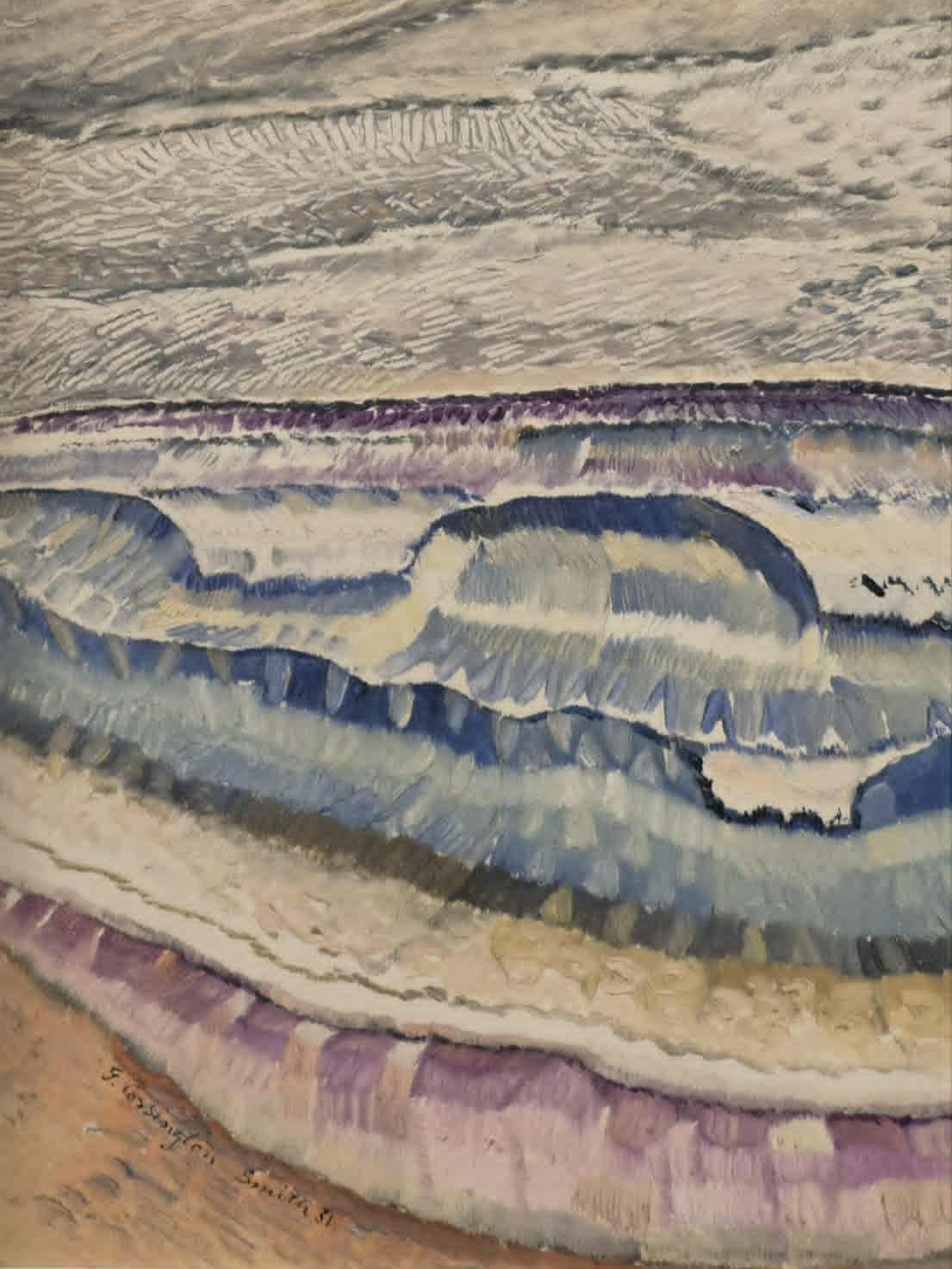
The variation of line is astounding.
Layered, rhythmic, fragmented and fractured, fluttering and feathering, directional. She is playing a symphony of lines in this painting, not one note.
Grace Cossington Smith took a ubiquitous subject - sea waves – and made it utterly her own.
The things we make - a cup, a drawing of a tree, a portrait, a vase, a sculpture or photograph of a mountain - have all been made before, many times over.
Our task as makers is to make them ours.
This doesn't happen in one dramatic leap. It happens through sensitivity, attention, and experimentation over time.
Inspired by Grace Cossington Smith’s variation in line, perhaps this is one place to begin.
Whether 2D or 3D, line is always present. Along the edge of a rim, within a texture, at the border of negative space, on a horizon, in the flourish of a figure.
How might you, with sensitivity to your own work, vary line?
How might you hold your tool differently?
Alter pressure?
Interrupt an edge?
Layer marks?
Move between thick and thin, shallow and deep, smooth and broken?
What might add another note or two to your work’s ‘symphony’?
Subtle shifts matter more than we sometimes realize. It is often within these subtle shifts that our work moves towards something deeply of our own making.
Anni Albers wrote: ‘The more subtly we are tuned to our medium, the more inventive our actions will become’.
This is what leads us towards exceptional work.
It's all been done before?
Yes.
But not by you… yet.
Amy x